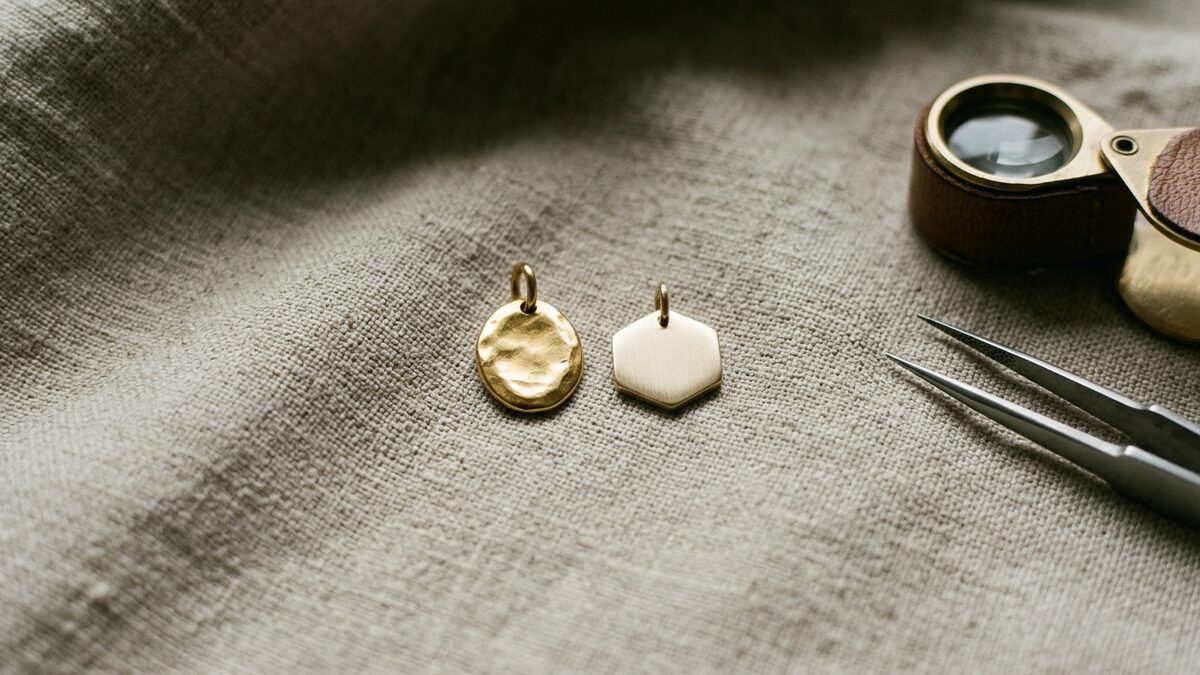
Karat measures the proportion of pure gold in an alloy. 24K is the unalloyed metal, soft enough to mark with a fingernail under sustained pressure. 18K contains 75 percent gold by weight, with the balance made up of copper, silver, and occasionally palladium or zinc depending on the desired hue. 14K contains 58.3 percent gold, with a proportionally larger share of alloying metals doing the structural work. That difference, roughly seventeen percentage points, governs nearly every behavioral trait that separates the two on the wrist or at the throat.
Color is the first thing most buyers notice, and it is the area where 18K has a clear and visible advantage. The higher gold content produces a warmer, more saturated yellow with a depth that catches incidental light rather than reflecting it harshly. 14K yellow gold reads cleaner and slightly cooler, closer to the color most North American buyers associate with traditional jewelry counters. Neither is wrong; they are different aesthetic registers. In white gold, the gap narrows because both karats rely on rhodium plating to achieve their final surface tone, and that plating wears at roughly the same rate regardless of what sits beneath it. In rose gold, 18K pulls toward a richer, more amber pink while 14K reads pinker and more youthful, again because of the alloy ratios doing the coloring work.
Hardness is where the comparison stops being aesthetic and starts being practical. On the Vickers scale, a typical 14K yellow alloy registers around 150 to 180 HV, while 18K yellow sits closer to 120 to 150 HV. The numbers move depending on heat treatment and exact alloy composition, but the relationship is consistent: 14K is meaningfully harder, more resistant to surface scratching, and more tolerant of the small impacts that accumulate across years of daily wear. For a pendant that spends its life sliding against fabric and occasionally catching on a collar, this matters. For a chain that is layered with others, it matters more. Soft gold develops a patina of micro-scratches that some collectors find romantic and others find shabby; the choice is personal, but it should be informed.
Why the pendant category settled on 14K as its working standard
Walk through a serious pendant case and the karat distribution is not random. The vast majority of medallions, religious pieces, signet-style pendants, and figure-engraved work is produced in 14K, and the reasons are practical rather than economic. A pendant carries detail on its face. Engraving, repousse work, granulation, milgrain edging, and stone-set bezels all depend on the alloy holding its form across decades. Softer metal rounds off. The crisp shoulder of a letter, the defined edge of a bezel, the raised relief of a saint's profile, all of these soften visibly faster in 18K than in 14K. A pendant in 14K looks essentially the same at year fifteen as it did at year one. A pendant in 18K, worn with the same frequency, will show its history.
The same logic applies, in reverse, to certain ring categories. A wide wedding band with no surface detail can be produced in 18K with no real long-term consequence; the surface will scratch, but the form is simple enough that the scratches read as character rather than degradation. A delicate solitaire with milgrain and pavé, on the other hand, benefits from the structural rigidity of 14K in the same way a pendant does. Karat selection, in other words, should follow the geometry of the piece more than any abstract preference for purity.
Where 18K still earns its place
None of this is an argument against 18K. For pieces where color saturation is the central design intent, where the object is held more than handled, or where heirloom intent justifies periodic professional polishing, 18K is the correct choice. Statement chains in heavy gauges, where the mass of metal absorbs impacts that would compromise a thinner piece. Cocktail rings worn occasionally rather than daily. Earrings, which spend their lives largely undisturbed against the side of the head and rarely encounter the abrasions that wear pendants down. In each of these cases, the warmer color and the cultural weight of the higher karat outweigh the modest hardness penalty.
The framing that serves buyers best is not which karat is better but which karat suits the way a particular piece will be lived with. A pendant worn under a shirt every day for thirty years is a different object from a chain worn over a jacket for special occasions, and the alloy should reflect that. The 14K standard for pendants is not a compromise. It is the result of generations of jewelers watching how their work aged on actual customers, and adjusting accordingly.