Best Place to Buy a Bat Mitzvah Necklace: A Guide
The best place to buy a bat mitzvah necklace is a jeweler that tells you exactly what the piece is made of, what arrives in the box, and what happens if something is wrong. For a Star of David, that means solid 14K gold or sterling silver, a stated chain, and policies you can read before paying. Hebrew-name, Chai and Star of David necklaces are the usual choices; the rest of this guide shows how to judge them.
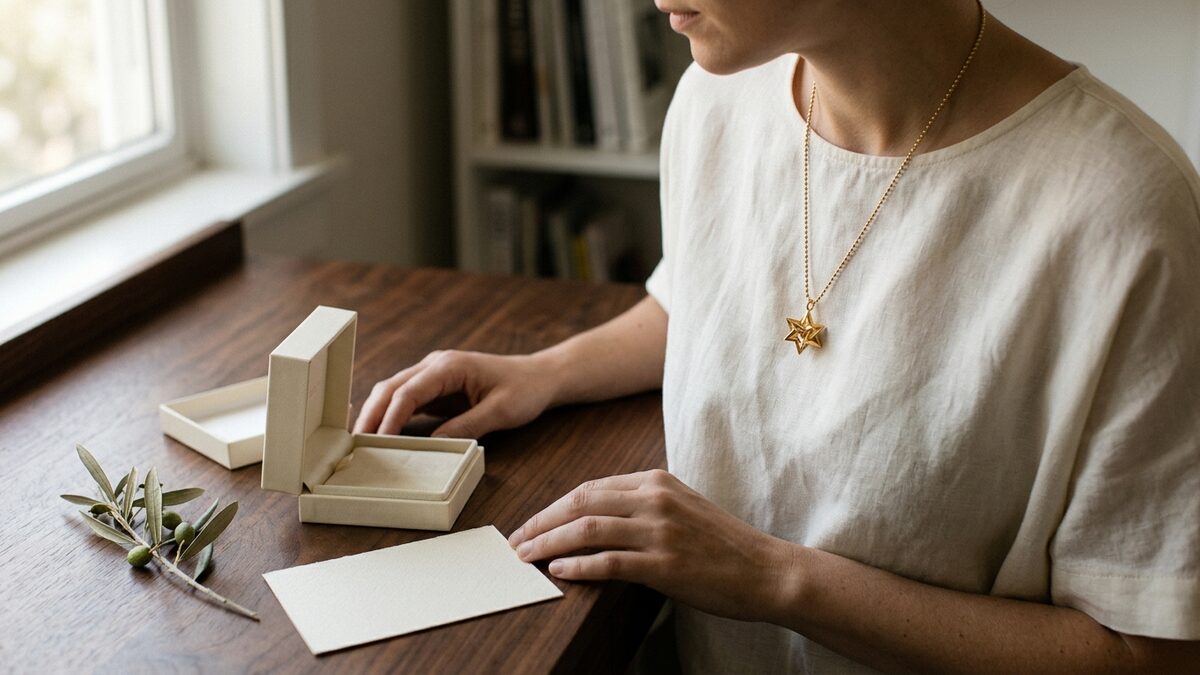
How to choose a bat mitzvah necklace she will keep wearing
Jewelry is one of the most common bat mitzvah gifts, and the recipient is usually twelve or thirteen. That shapes the brief. The necklace should look right at the ceremony and still belong on an ordinary Tuesday, because a piece kept in a drawer is a gift that missed.
Buyers tend to land in four families. A Star of David is the most direct statement of Jewish identity and the easiest to wear daily. A Chai pendant is a more graphic option. A Hamsa suits a girl who prefers a symbol with a decorative outline. A Hebrew-name necklace is the most personal, and the one that depends most on the jeweler's lead time. Gift guides often add bracelets, rings and earrings to the list, but the necklace is the piece this guide is about.
Choose the symbol first, then the maker. A well-made version of the wrong symbol is still the wrong gift, so ask the family, or a close relative, which one she already wears or admires.
Metal is the next decision. The choice is gold in yellow, rose or white, or sterling silver, and the real question is which colour she already wears and whether she might layer the necklace with others. Yellow gold reads warm and traditional; rose gold is softer; white gold and silver are cooler and sit easily beside other jewelry. If a diamond is part of the design, ask whether it is natural or lab-grown, since sellers differ and the answer should be stated, not implied. A stone-free pendant is a perfectly good choice for a first fine piece.
Before you compare sellers, compare the facts each one is willing to state. A reliable answer to the question of where to buy is simply the seller that states the most, in plain language, before you pay:
- The metal and karat. A listing should name it, for example 14K yellow gold or 925 sterling silver, and say whether the piece is solid.
- The chain. Some pendants arrive on a chain; others are sold alone. Confirm which, and ask about length.
- The stones. Natural or lab-grown, and how they are set.
- The timing. Handling and transit estimates, plus a longer window for anything personalised, set against the ceremony date.
- The policy. Whether personalised pieces can be returned, and who pays for return shipping.
- A real contact. An email address or phone number that actually answers.
Price and value are easiest to judge by comparing like with like. Set two necklaces side by side on karat, solid versus hollow construction, natural versus lab-grown stones, and whether a chain is included. We will not quote a figure here, because a number without those details misleads. As for whether gold jewelry holds value, treat a bat mitzvah necklace as a keepsake first; any resale worth depends on the metal and the market on the day, and no seller can promise it in advance.
Where to buy a bat mitzvah necklace: what Yehood offers
Yehood is a Los Angeles workshop that makes Jewish jewelry, and its signature is the 3D Merkabah, a Star of David built in the round from two interlocking tetrahedra. The pendant comes in 14K yellow, rose and white gold, and in sterling silver, with natural diamonds set by hand where a design includes them. The metal is solid throughout; pieces are not hollowed out or plated to imitate gold.
Each pendant necklace arrives on a ball chain with adjustable hoops, while a standalone pendant does not include a chain, so check which one you are choosing. Because every piece in the catalog is one of ours, they can be layered freely: a 3D Merkabah Star of David pendant necklace in 14K yellow gold beside one in rose or white gold gives a stacked look with a single maker's proportions throughout. For a girl who already wears a fine chain, a standalone pendant may be the more useful gift.
Timing matters more than most buyers expect. Yehood ships within the United States only, with free shipping on every U.S. order, and parcels travel insured with tracking. The stated handling time is one to three business days, followed by two to five business days in transit. Made-to-order, engraved, custom-sized and personalised pieces take longer, and an estimate is given before the work begins. If the ceremony is close, say so in your first message.
On personalisation, be specific about what you want. Yehood takes a limited number of custom pieces, such as metal changes, alternate chain lengths and bespoke Merkabah sizing, and will say whether a request is something it can make well. If your heart is set on a Hebrew-name necklace or a Chai pendant, ask before assuming; a jeweler that specialises in name pieces may be the better place for that particular request.
Read the return policy before you order, and confirm anything unclear by email. Custom, made-to-order and personalised pieces are final sale unless they arrive defective, and for a damaged or defective item the instruction is to contact the workshop promptly with photographs. Buying a gift is calmer when you know the terms in advance.
A few gift considerations remain. If you are a guest rather than a parent, ask the family about metal colour and existing jewelry so the necklace does not duplicate a piece she owns. Keep the packaging and any certificates intact until she has seen it. Include a short handwritten note; the object carries the symbol, but the note carries the reason. Orders and questions go to team@yehood.com or +1 (213) 373-4424, and replies usually arrive within one business day.
So the best place to buy a bat mitzvah necklace is the one that answers these questions plainly: what it is made of, what comes with it, when it will arrive, and what happens if something is wrong. A Star of David in solid gold or sterling silver, bought from a maker who states all four, is a gift that holds up to both the ceremony and the years after.